
Motor Insurance -Types/Classification
Here are some key points highlighting the importance of motor insurance :Motor Insurance is a type of insurance policy that provides financial coverage for vehicles. It safeguards the policyholder’s car or two-wheeler against potential risks, including damages resulting from accidents and other threats. In India, motor insurance is compulsory, offering essential financial security for vehicle owners.
**Legal Requirement**: In many countries, having motor insurance is a legal requirement. Driving without insurance can lead to fines, penalties, license suspension, or even legal consequences.
**Financial Protection**: Motor insurance provides financial protection against the costs of repairing or replacing a vehicle damaged in an accident. It also covers liabilities arising from third-party property damage or bodily injuries.
**Personal Protection**: Comprehensive motor insurance policies can include coverage for medical expenses resulting from a motor vehicle accident, providing personal protection for drivers, passengers, and pedestrians involved in the accident.
**Peace of Mind**: Knowing that you are financially protected in case of accidents or unforeseen events provides peace of mind while driving. It allows drivers to focus on the road without worrying excessively about the potential financial consequences of an accident.
**Coverage for Theft and Damage**: Motor insurance typically covers losses due to theft, vandalism, natural disasters, and other non-collision incidents, offering additional security for vehicle owners.
. **Legal Liabilities**: Motor insurance covers legal liabilities arising from accidents, including compensation for third-party injuries or property damage. This helps protect policyholders from expensive lawsuits and legal expenses.
. **Loan Requirement**: If you have financed your vehicle through a loan or lease, the lender may require you to have comprehensive insurance coverage to protect their investment until the loan is fully paid off.
. **Financial Stability**: In the event of a severe accident where the driver is at fault, motor insurance helps ensure that the driver can fulfill their financial obligations to repair or replace damaged property or compensate injured parties, maintaining their financial stability.
. **Responsible Driving Culture**: Having motor insurance fosters a culture of responsible driving by encouraging drivers to adhere to traffic laws and safety regulations to minimize accidents and insurance claims.
. **Support for Road Safety Initiatives**: Motor insurance companies often support road safety initiatives and campaigns aimed at reducing accidents, injuries, and fatalities on the roadways, contributing to overall public safety
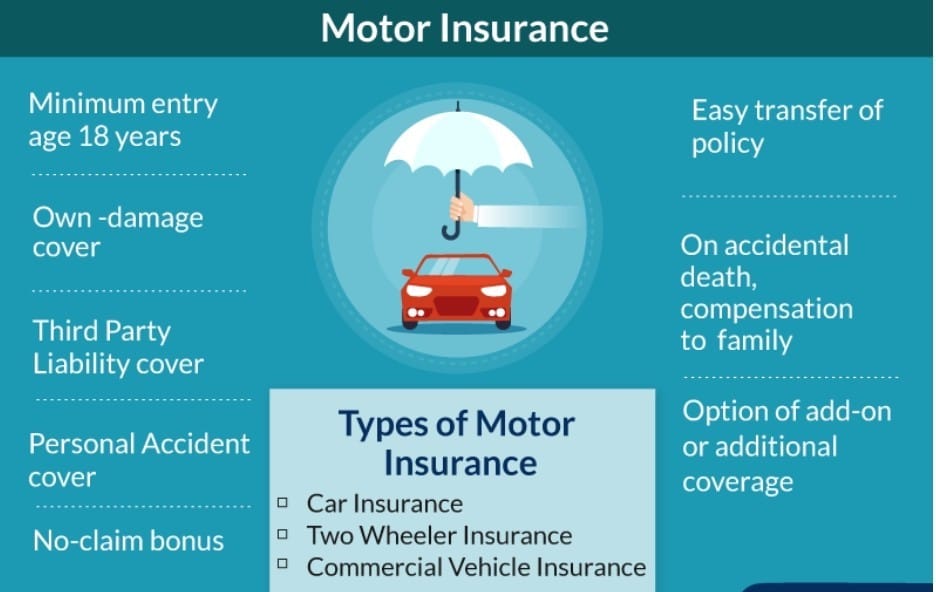
Motor Insurance-Key Feathers
. **Third-Party Liability Coverage**: Covers damages to another person’s property or injuries to another person in an accident where you are at fault.
. **Own Damage Coverage**: Protects your car against damage due to accidents, theft, fire, natural disasters, etc.
. **Personal Accident Cover**: Provides coverage for medical expenses in case of injuries or death of the driver and passengers.
**No Claim Bonus (NCB)**: Discount on premium for claim-free years.
. **Add-On Covers**: Optional covers for enhanced protection such as zero depreciation cover, engine protection, roadside assistance, etc.
**Policy **:Exclusions Specific situations or conditions not covered by the policy, such as drunk driving, mechanical breakdown, etc.
**Deductibles**: Amount you need to pay out of pocket before the insurance coverag
8.** consumable cover**In the context of car insurance, consumables refer to items that need regular replacement due to wear and tear. These include essential components like brake oil, engine oil, lubricants, refrigerant for the AC system, ball bearings, nuts, screws, bolts, washers, and other similar parts crucial for the smooth functioning of a vehicle. These items are not typically covered under standard car insurance policies, as they are considered routine maintenance expenses rather than sudden or accidental damages. Therefore, policyholders are generally responsible for the cost of replacing consumables as part of regular vehicle maintenance.
understanding these feathers helps in choosing the right car insurance policy that suits you and provides adequate protection for your vehicle. you can compare and choose in different motor insurance companies.