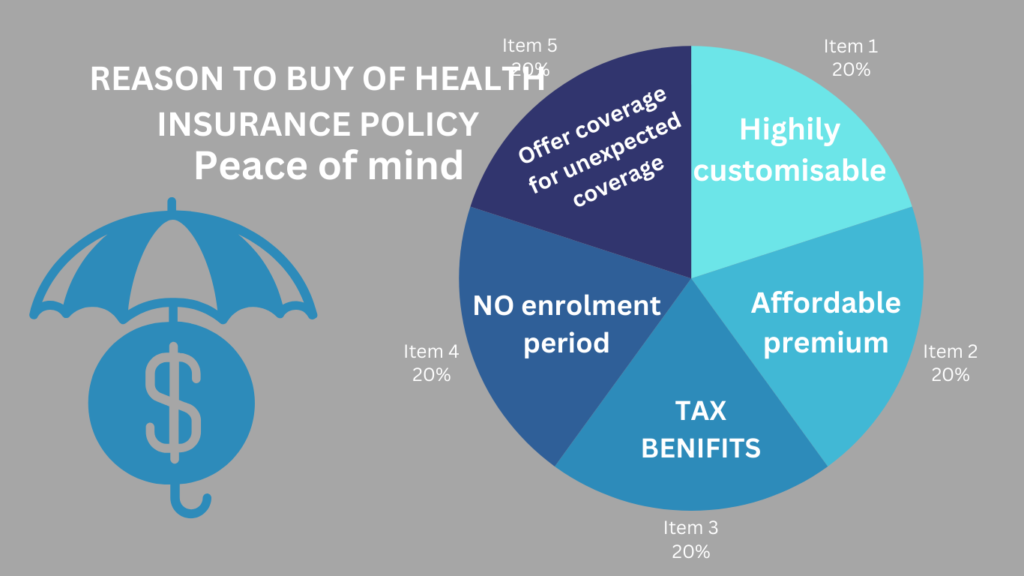
Before buying health insurance it’s essential to consider several key factors to ensure you select the most suitable coverage for your needs: you can compare the different companies after that final health insurance company.
2.1Assess your Needs
Evaluate your healthcare needs, including any existing medical conditions, medications, and anticipated healthcare expenses. Consider your age, family members’ health, and potential future medical needs to determine the level of coverage you require.
2.2 Choosing a Right Covrage Option
**Choosing the Right Health Insurance Sum Insured**
Selecting an optimal sum insured is crucial to ensure your health insurance adequately covers medical expenses. A low sum insured defeats the purpose of investing in health insurance and should be avoided.
Determining the right sum insured is straightforward if you consider the following factors:
1. **Number of Insured Members:** Assess how many individuals will be covered under the policy.
2. **Pre-existing Conditions:** Evaluate if any member, including yourself, has pre-existing medical conditions that may require regular medical care.
3. **Hospitalization and Treatment Costs:** Estimate the basic expenses associated with hospital stays and medical treatments.
4. **Medical Inflation:** Consider the increasing costs of medical services over time.
Most insurers assist in calculating the ideal sum insured based on your income, current expenses, existing coverage, and the number of members to be insured. Alternatively, you can estimate the required sum insured using a simple formula:
**Sum Insured = 50% of Annual Income + Total Hospitalization Costs in the Last 3 Years**
For example, if your annual income is INR 15 lakh and you incurred hospital bills totaling INR 5 lakh over the last three years, the optimal sum insured would be:
50% of INR 15 lakh + INR 5 lakh = INR 12.5
Accordingly ,As per you needs you can review and compare plan for different Health Insurance Companies
2.3 Claim Settlement Ratio
The claim settlement ratio indicates one critical aspect – what percentage of claims the company resolved in a financial year. A higher ratio signifies that the company is committed to settling its claims promptly, a factor that benefits the insurer.
3.Health Insurance Claim Rule Change:May29,2024
The Insurance Regulatory and Development Authority of India (IRDAI) has introduced significant changes aimed at streamlining the health insurance claim process, particularly concerning cashless claims. Here are the key updates based on your description:
1. **Time-bound Approval for Cashless Discharge Requests**: Insurers are now required to approve cashless discharge requests within three hours of receiving the request from the hospital. This means that once the hospital submits the discharge request to the insurer, the insurer must promptly authorize the discharge within three hours.
2. **Elimination of Delay in Discharge**: IRDAI emphasizes that policyholders should not be made to wait unnecessarily in hospitals due to delays in claim processing. This directive ensures that once the necessary documentation and request are submitted by the hospital, the insurer must promptly respond to facilitate the discharge of the policyholder.
3. **Liability for Extra Hospital Charges**: If there are delays in approving the cashless discharge request beyond the stipulated three-hour timeframe, insurers will be liable for any additional hospital charges incurred due to this delay. This provision encourages insurers to adhere strictly to the timeline set by IRDAI.
These changes are part of IRDAI’s efforts to enhance customer experience and reduce the inconvenience faced by policyholders during the claim settlement process, particularly in health insurance. By setting clear timelines and accountability measures, IRDAI aims to ensure smoother and faster claim settlements, thereby benefiting insured individuals and hospitals alike.